Saeed Teebi, Her First Palestinian
It is not surprising to me that Saeed Teebi was able to come out absolutely swinging with this first collection of his, pulling no punches.
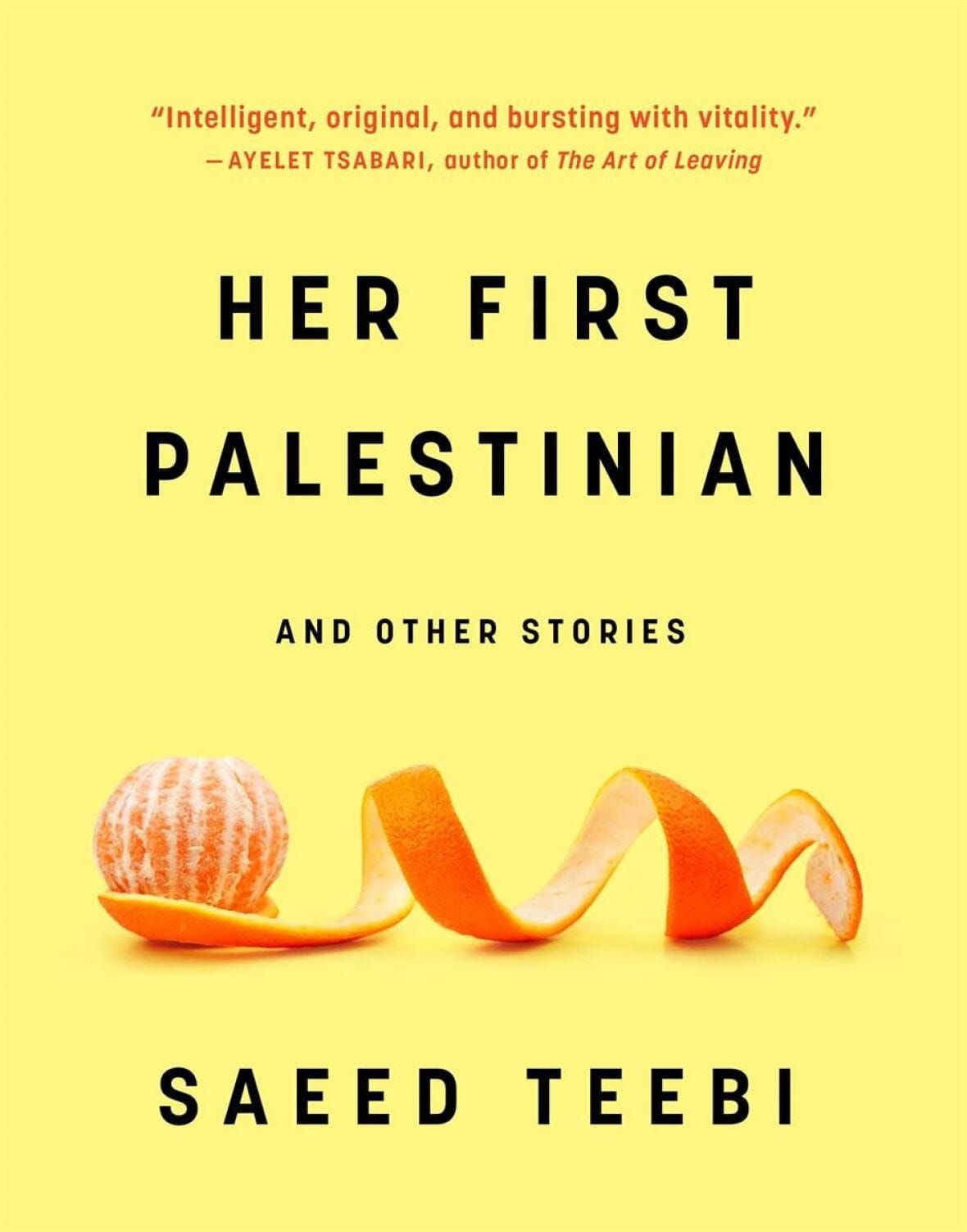
When I finally closed the book, the tears that had been welling up in my eyes since Firdaos and Salah were slumped on the floor together watching the news of another strike killing Palestinians burst like waterfalls, only muted by the sound of Stravinsky’s Firebird suite I had playing softly in the background while reading.
Not only was the final story of Teebi’s masterful collection heartbreaking, the acknowledgements section reaffirmed something I wasn’t looking to have reaffirmed, and already knew from background research I had done weeks prior on Saeed Teebi’s career:
“Special thanks to Geraldine Baker, one of the earliest supporters of my writing. In the many years when I did not write a word, I thought of her words.”
It’s been nearly a year since my daily poetry chapbook reviews of April 2025. Although I had been writing here and there, got published in The Malahat Review, periodicities and CV2, I was simultaneously faced with my job gradually disappointing me to the point of throwing in the towel.
No desire to get into personal specifics here, but suffice it to say, as big of a fan as I thought I was of second winds, all promising gusts had strayed from my sails and reading about Saeed Teebi overcoming his sabbatical inertia was doubly cathartic in juxtaposition with the gravity of the fiction playing out before my eyes.
Reading the copy of Her First Palestinian amicably provided me by translator, poet, and the founding poetry editor of Women and Environments International, Sonja Greckol last May, I put it near the top of my Palestine reading list of potential books to review because I was already familiar with Saeed Teebi’s award-winning writing and timely, discursive interviews through social media.
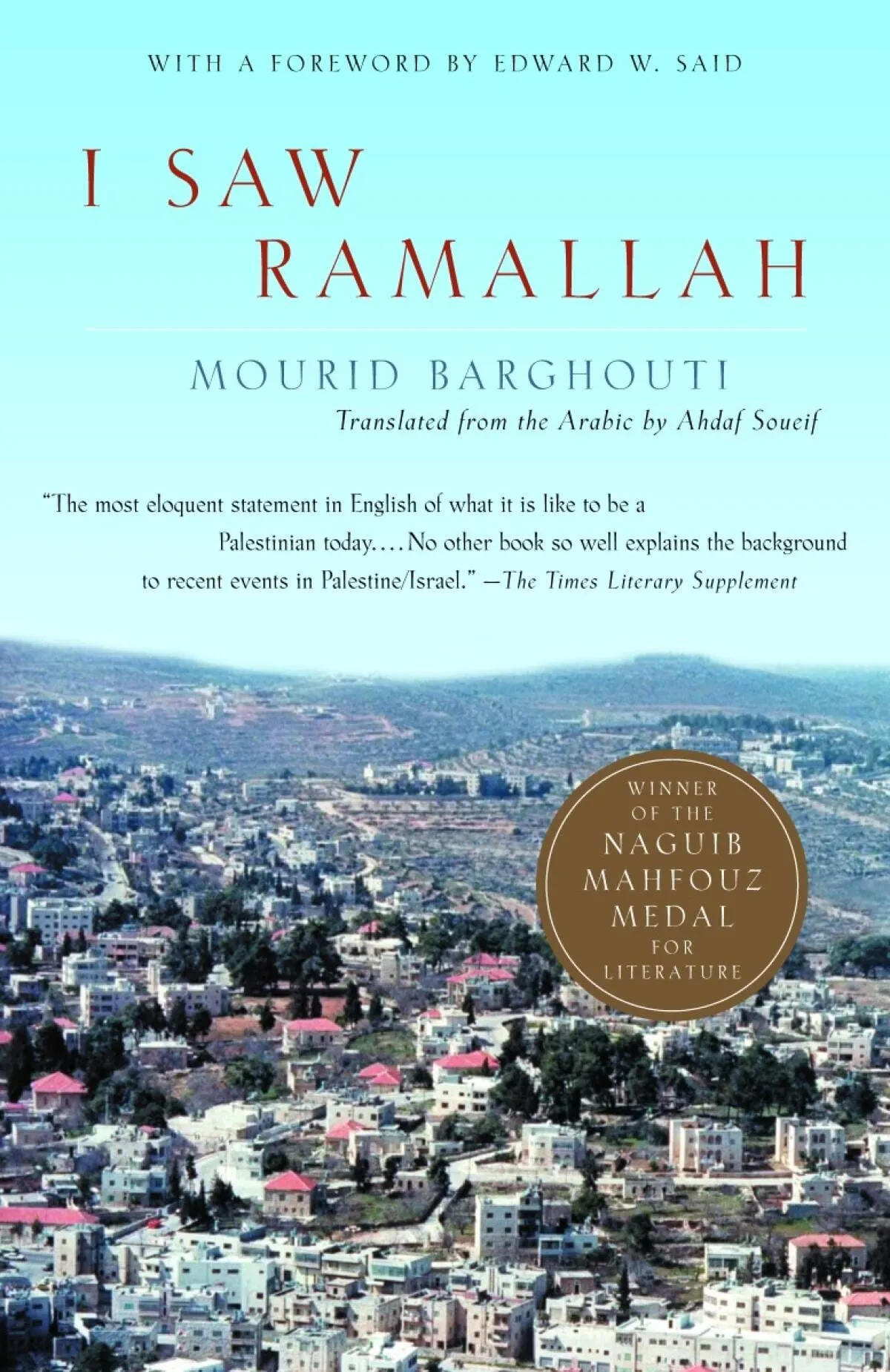
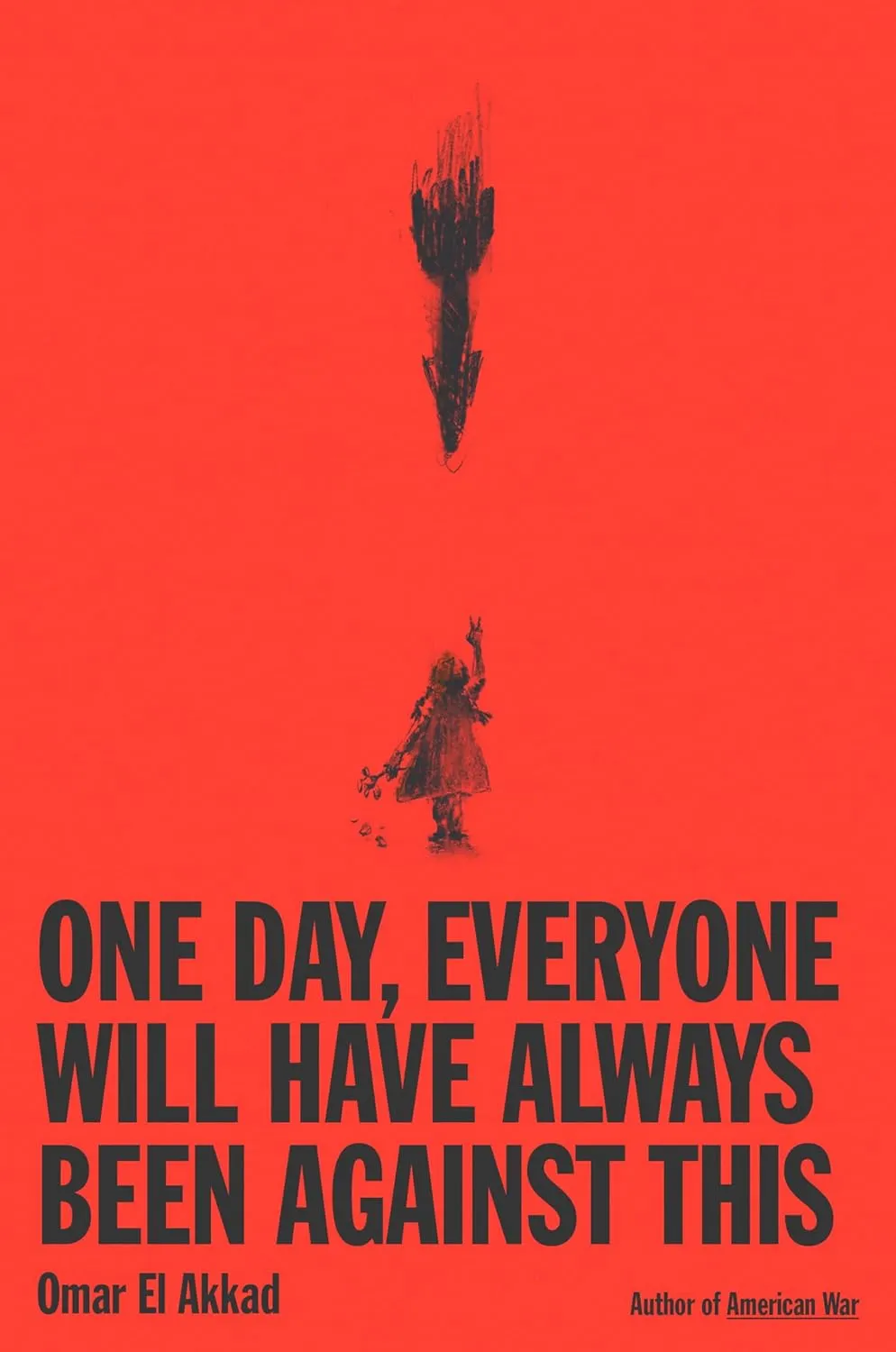
In the interim, I covered Omar El Akkad’s celebrated memoir-essay One Day Everyone Will Have Always Been Against This (2023) and Mourid Barghouti’s 1997 memoir-essay I Saw Ramallah (2000), translated by Ahdaf Soueif. And glad though I was to get these reviews out, a noticeable absence of fiction related to Palestine wearied my conscience. I began missing other self-imposed deadlines for other reviews in my head.
Although I normally try to read everything of an author before reviewing their work, especially for the first time, on my blog, Her First Palestinian by Saeed Teebi deserves my exception.
His latest work, You Will Not Kill Our Imagination (2025), deserves to be taken in with at least as much attention and afterthought as I have taken with his fiction collection. Her First Palestinian is truly a masterpiece.
Short fiction written in Canada has long held a special place in not only my heart, but the hearts of readers internationally. And for many decades. And for good reason.
It is not surprising to me that Saeed Teebi was able to come out absolutely swinging with this first collection of his, pulling no punches.
Several names in his acknowledgements at the back of his book worth special attention include Palestinian editor Emilia Morgan, grad school instructors Dennis Bock and Michel Basilières, and short story writer and occasional book blogger Margaret Watson, among others.
Saeed Teebi is a Palestinian, lawyer, and writer of fiction and non-fiction, born in Kuwait.
But I want to dive into a handful of stories to add to the ongoing conversation among fans of Teebi’s not so green around the ears as myself as well as hopefully inform and entice potential new fans of his, as I would with any other review of mine on this blog.
Nine stories span 239 nearly square pages in this medium height millennial yellow paperback, the strongest of them being the first and last, although all of them resonate in that pleasantly peculiar way that a lot of fiction and poetry began to take on new meanings as the COVID-19 pandemic began its widespread transmission throughout the world in 2020, only this time more for the political perfidy of recent times more so than for the virus itself, which is not wholly absent from these narratives.
I will begin with the middle and work my way out, however, because as strong as the opening and closing stories of this collection are, I think my favourite would have to be its fifth, “Ushanka” (as it was for reviewer Zachary Jericho Couture, as well), about a wandering grandfather who bindles off in his old age to Russia trying to hunt down what he more or less admits would be the love of his life were it not for his late wife.
Ushanka is one of few stories in Her First Palestinian that takes on a different form from the rest. An epistolary exchange between granddaughter, Dasha, and grandfather, seedo Abu-Brahim, the format of the tale eagerly lends itself to expertly timed revelations, admissions, and irony, each device proving Saeed Teebi’s calling to the craft and gut instinct to have been right all along.
Though tragic elements course through this collection of diaspora narratives, Ushanka is certainly among the more light-hearted of the tales. What plays out like some sort of Montesquieuesque side quest not only exemplifies Teebi’s discipline in storytelling, but best demonstrates his ability to create incredulously intertwined characters whose lives are, at the same time, mechanically interlocking yet thoroughly feeling, living, breathing individuals. In this story in particular, Teebi hits his stride and makes good on the confidence he had been biding all those years beforehand.
In Ushanka, the grandfather and his lifelong crush Valeria Mikhailovna are having a conversation in Yafa (Jaffa), March 15, 1947, 9 months before the Nakba. After her chaperone, Dmitri, informs him they’re not Romanians, but Russians, yet not Jews, and touching on their travels as pilgrims, as a sort of tourism (her parents were exiled as Social Democrats following the revolution), she remarks to Abu-Brahim “It feels like it’s… going? Like… soon it will be no more like this. I don’t know how to say it.” He retorts:
“Don’t put too much stock in the news[.] We will never let this place go. It will always be like this, maybe a few changes, but not much. Yes, there are more Jews coming all the time, and lots of fighting for land. There was a farmhouse on an orange orchard not too far from here that the Jews blew up, which worried my uncle. And they destroyed the train station in Haifa, too, I heard. But it’s all temporary. Things will settle down, and people will live together. Anyway, how can they get rid of us Arabs? It’s impossible. What a sad dream for them to have.”
She then expresses her desire to return to Russia one day to visit her grandfather’s dacha, and the emotional crescendo of the whole story is secondary in effect only to the satisfying full-circleness of Teebi’s ability to frame his characters this way, on the nose with everything but never corny.
I think this is that post-outbreak effect that poetry and fiction took on from the start of the decade I was mentioning above, it’s a welcome deliberateness on the part of the author to entertain us and lean into the obvious, because the more important part of the story is the message it has to share, not the obviousness of how the granddaughter’s name connects to the grandfather’s one-that-got-away.
I think that also speaks to the power of the opening and closing stories, somewhat, too. In a time where the conversation about Palestinian statehood and ethnic cleansing was beginning to find its second wind in mainstream media, and social media, a lot of people who had, because it had been convenient, been willfully uninformed, were looking for answers.
It’s not lost on me to see comments online this weekend, March 2026, in response to Canada’s current Prime Minister vocalizing support for the strikes the US and Israel are carrying out in Iran, that his words are a clear indication that the Overton window has shifted, in addition to being deeply hypocritical and unaligned with his recently celebrated speech at the Davos economic forum hardly a month prior.
With Saeed Teebi’s work coming out through House of Anansi Press August 2, 2022, the work has only grown deeper in significance since the flagrant impunity of Israel’s genocide and colonial conquest of Palestine since the events of October 7, 2023.
For years now, mainstream news and social media platforms have largely catered to the humanitarian crisis, war crimes, crimes against humanity, acts of aggression, and disinformation campaigns that Israel continues to carry out and define itself by, whether by misreporting, downplaying, spinning or outright neglecting them as settlers and soldiers continue to ethnically cleanse Palestinians.
I had thought that the discourse was already generally agreed upon by leftist academics, activists and artists beforehand, but with everything that has happened since, it has become abundantly, painfully clear how insufficient the number of convictions among regular people, not just humanities professionals, about Free Palestine had been, leading up to this moment in history. A reckoning of orders of magnitude currently incalculable will be necessary to raise the bar from where it’s ended up, beneath Hell itself, where it has been lowered to for as long as anyone can seem to remember.
This phenomenon is allegorically summed up by the titular story of the collection, “Her First Palestinian”, which Saeed Teebi has gone on to characterize in interviews as the story of an affable, successful, loving doctor whose romantic relationship with a Canadian lawyer falls apart after first doing the labour of educating her on the history of Palestine and then losing her to the lobbyist crusade for Palestine. It speaks to a post-colonialist fervour among liberal-aligned Westerners to fetishize the Other, and the doctor, Abed, not being victim enough to maintain a romance with.
On the allegorical scale, it reflects on the selective contextualizing that Western powers appear to do, in alignment with Israel, to recognize one group of people’s suffering over another’s. Germany and the UK are still caught up with the taboo of false accusations of anti-Semitism, and actively criminalizing people who speak out in support of Palestine during their continued ethnic cleansing.
The Canadian lawyer, Nadia, spends three weeks in the West Bank, fighting for detainees unjustly thrown in prison without sentences, publicizing the brutalizing of journalists at protests, and taking on the case of Kamal. This Palestinian man is the object of her emotional infidelity, but really, the characters are symbols of not only the ongoing discourse, but a vision of the future Overton window shift that will occur when the genocide is finally over, as well as a reminder to support the Palestinians in your life, not just the ones you see on social media. You know?
But that’s also the dark sense of humour in Saeed Teebi’s work, that his character Abed concludes this 12-page story with the title of the collection, as a hapless respite. As though to say it was inevitable, this was just the typical pipeline or arc of yet another Canadian liberal.
The apprehension Omar El Akkad describes in his One Day Everyone Will Have Always Been Against This, for that future moment when people grow accustomed to calling what Israel and the West have conspired to do to Palestinians in Palestine what it is (a genocide, again) is the same apprehension in Saeed Teebi, just with a different delivery, that is more obvious than my long-winded paragraphs may do justice to explain.
Which takes me to the final story of the collection, “Enjoy Your Life, Capo” about a Palestinian software engineer who sells a biotech app to the Israeli Ministry of Defense that detects breathing on a per-user basis like a fingerprint through smartphone cameras.
This story I think best touches on the Marxist realism of capitalism through this father-daughter story of unequivocal betrayal.
As reposted by @seastersjones on Instagram, a tweet by @Furbeti reads:
The Epstein class deliberately keeps society on the brink of bankruptcy and revolt to maintain control.
When your healthcare, housing, and survival depend on your employer, control doesn’t need to be enforced, but rather it’s built into the system.
Having quit his job following the death of his parents, the main character of this story, Salah, ends up struggling to make ends meet after his innovative breath-monitoring app fails to find a single customer over the span of months, and unable to find funding, or even get his old job back, he ends up doing the unthinkable, selling it to the IDF to track Palestinians and eradicate them:
“I understand that your technology was originally developed for medical purposes[.] We can see how it might be helpful there, and should we complete the purchase, we may choose to use it in our hospitals in the future. However, what attracted us is that the technology is useful in cases when a person’s face is partially or fully obstructed. My colleague Lior here tells me you’ve tested it with patients wearing medical masks? As you know, we are facing threats every day from masked persons. Terrorists slingshot rocks and explosives at our soldiers, who are just boys and girls doing their jobs: defending Israel and keeping her citizens safe. The terrorists can act with complete impunity because we cannot readily identify them. Instead, we have to resort to manhunts, interrogations, close inspections of video footage, and so forth. Your technology has the potential to simplify all of that. With it, we can compile a breath database, which we would then mine for matches to the criminals hiding in their scarves. We could install the technology on street corners, on drones, or on helmets; we could even have our covert units use it with their personal phones. The potential is really exciting for us. [...]”
The obvious becomes sickening. But while Salah’s daughter Firdaos experiences a rise and fall as a teenage social media activist for Palestine, the app he developed to monitor her health becomes his only hope for salvation. The thing about Salah is he had muted all hashtags, buzzwords, and accounts associated with Palestine long ago, including his own daughter. So his dictum opening the story ends up shamefully embodying his hubris: “What you have to do is silence the world.”
It takes on this deep double meaning, as the story progresses, as though to rhetorically ask the reader, “what are you going to do? Silence the world?”
I think this story is a great reminder for the people in your life, or the world, who say they don’t follow the news, or don’t interest themselves with politics, or the like. The tragedy of this fictional diaspora Palestinian engineer takes this double-edged sword of white guilt and Palestinianizes it by making it the burden of a diaspora man trying to fit in, almost like a compact reversal of Heinrich von Kleist's Erdbeben in Chili.
People don’t want to tune into the news because then it means they’ll have to have an opinion, and if they don’t, it means they’ll feel complicit. So better to just ignore it, mute it, whatever. Because that feeling is too difficult to unpack. It means you’ll have to change and become a better person. How dare the world tell you what to do?
It’s what the West has been doing for nearly a century with regards to Palestine and I think the moment we collectively change the conversation for good, these stories will have a third wind and need to be read again.
Bibelotages Newsletter
Join the newsletter to receive the latest updates in your inbox.